Optimising your 5G connection: a comprehensive comparison of antenna cables
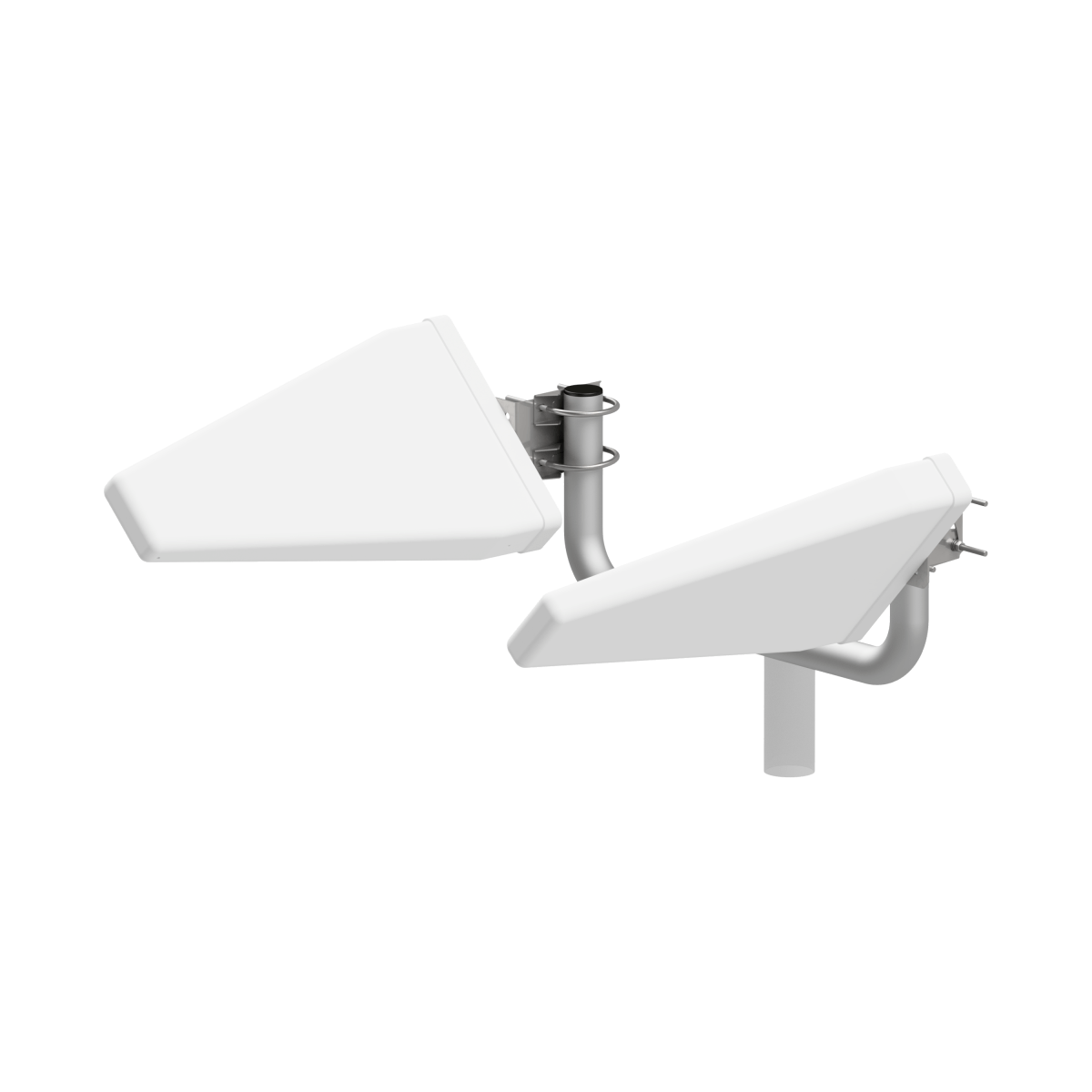
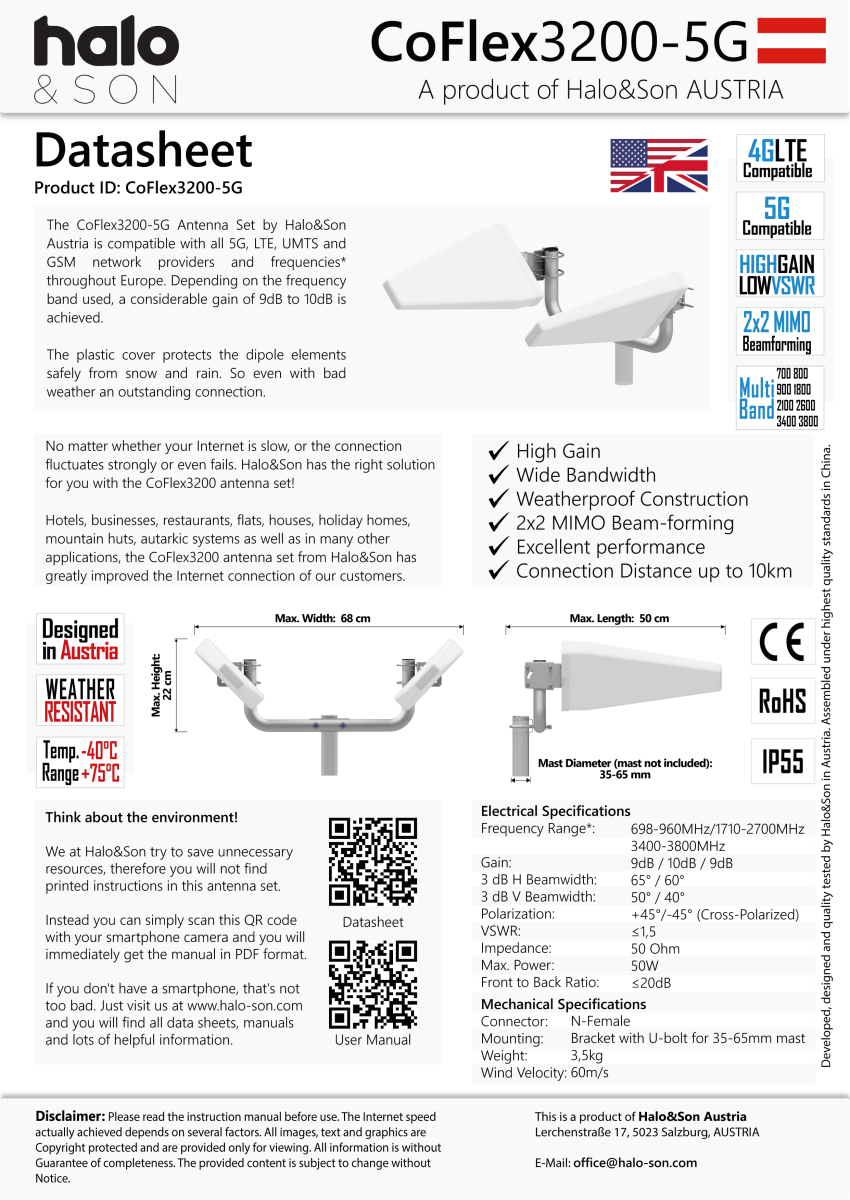
The revolution of 5G technology has permanently changed the world of the Internet, and with it the demands on the quality of the network infrastructure are increasing. A key component in this scenario is the antenna cable, which plays a crucial role in signal transmission. In this comprehensive article, we look at the different cable types - RG174, RG58, CoFlex2200, CoFlex2700, CoFlex2800 and CoFlex2900 - in terms of attenuation, diameter and shielding, and assess their suitability for use with 5G outdoor antennas such as the CoFlex3200 or CoFlex5200.
1.1. Why the choice of cable for 5G is crucial
With the promise of 5G, faster data rates and lower latency, it is more important than ever that every component in the network is optimised to take full advantage of these benefits. This is where the antenna cable plays a central role, as it provides the physical connection between the router and the antenna.
2. Attenuation and its significance
Attenuation, measured in decibels per metre, is a measure of the signal loss that occurs in a cable. Lower attenuation values are critical for 5G applications as they ensure that the signal is transmitted with minimal power loss.
3. cable types in comparison
a. RG174 and RG58
- RG174: Thin (diameter approx. 2.55 mm) and flexible, but with high attenuation (approx. 1.5 dB/m at 2 GHz). With simple shielding, it offers an overall loss of around 15 dB over 10 metres. RG58: Medium diameter (approx. 5 mm), less flexible but with better attenuation (approx. 0.8 dB/m at 2 GHz). With simpler shielding, the total loss is around 8 dB over 10 metres.
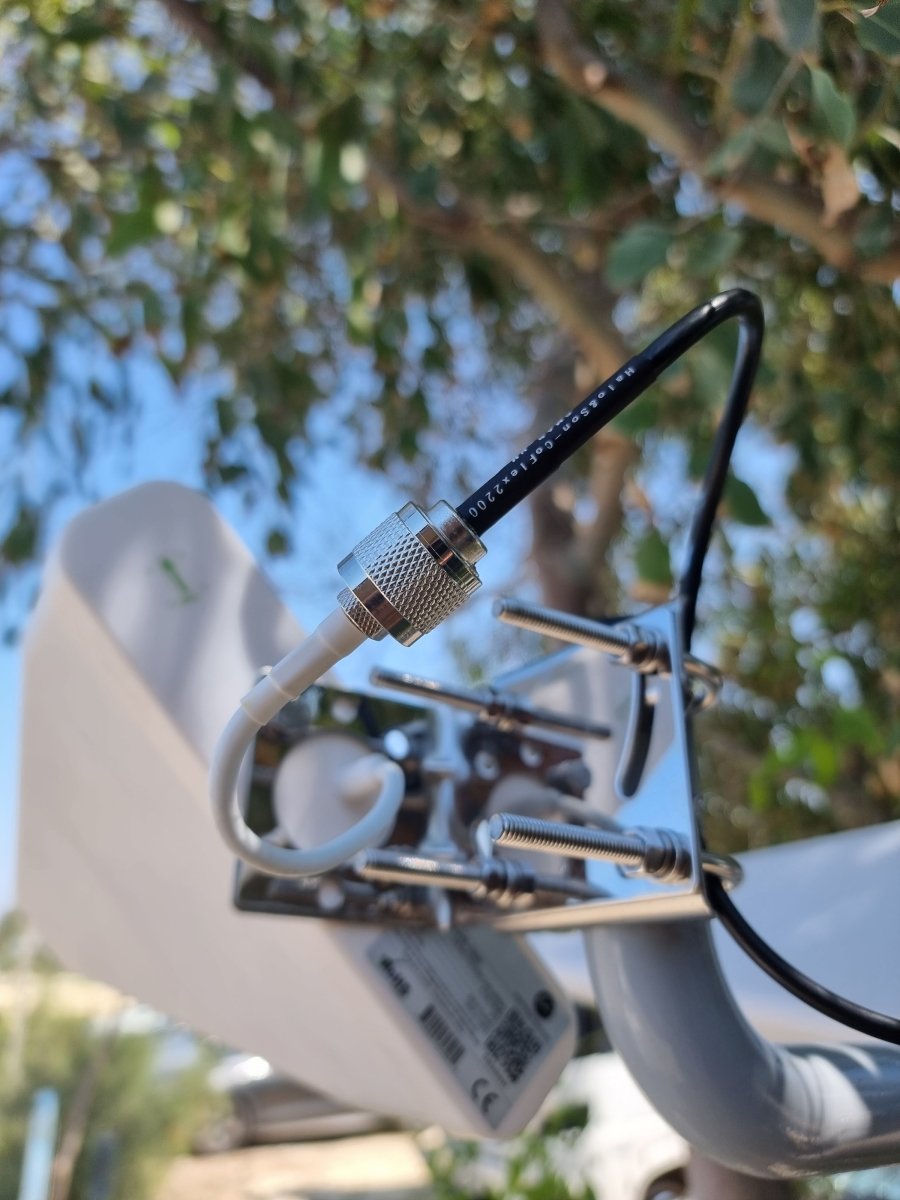
- CoFlex2200 (LMR200 equivalent): Diameter approx. 4.95 mm, with an attenuation of approx. 0.6 dB/m at 2 GHz. With double shielding, the loss is 6 dB over 10 metres. CoFlex2700 (LMR240 equivalent): Diameter approx. 6.1 mm, with 0.5 dB/m attenuation. With stronger shielding, this results in a total loss of 5 dB over 10 metres. CoFlex2800 (LMR300 equivalent): Diameter approx. 7.62 mm, with only 0.4 dB/m attenuation. Provides even stronger shielding and a loss of 4 dB over 10 metres. CoFlex2900 (LMR400 equivalent): The thickest cable with a diameter of approx. 10.29 mm. With the lowest attenuation of 0.2 dB/m at 2 GHz and excellent shielding, this results in an overall loss of just 2 dB over 10 metres.
- Choosing a selection results in a full page refresh.
- Opens in a new window.
b. CoFlex series
4. Conclusion: Choosing the right cable for your 5G outdoor antenna
Choosing the right cable for your 5G outdoor antenna requires a balance between attenuation, flexibility, diameter and shielding. While thinner cables such as RG174 and RG58 can be useful in certain scenarios due to their flexibility, they are less suitable for 5G applications due to their higher attenuation values and simpler shielding. The CoFlex series offers a variety of options with different diameters and shielding levels to achieve the best results for your specific requirements. CoFlex2800 and CoFlex2900 are particularly recommended for longer distances and demanding 5G applications as they minimise signal loss and provide excellent signal quality.