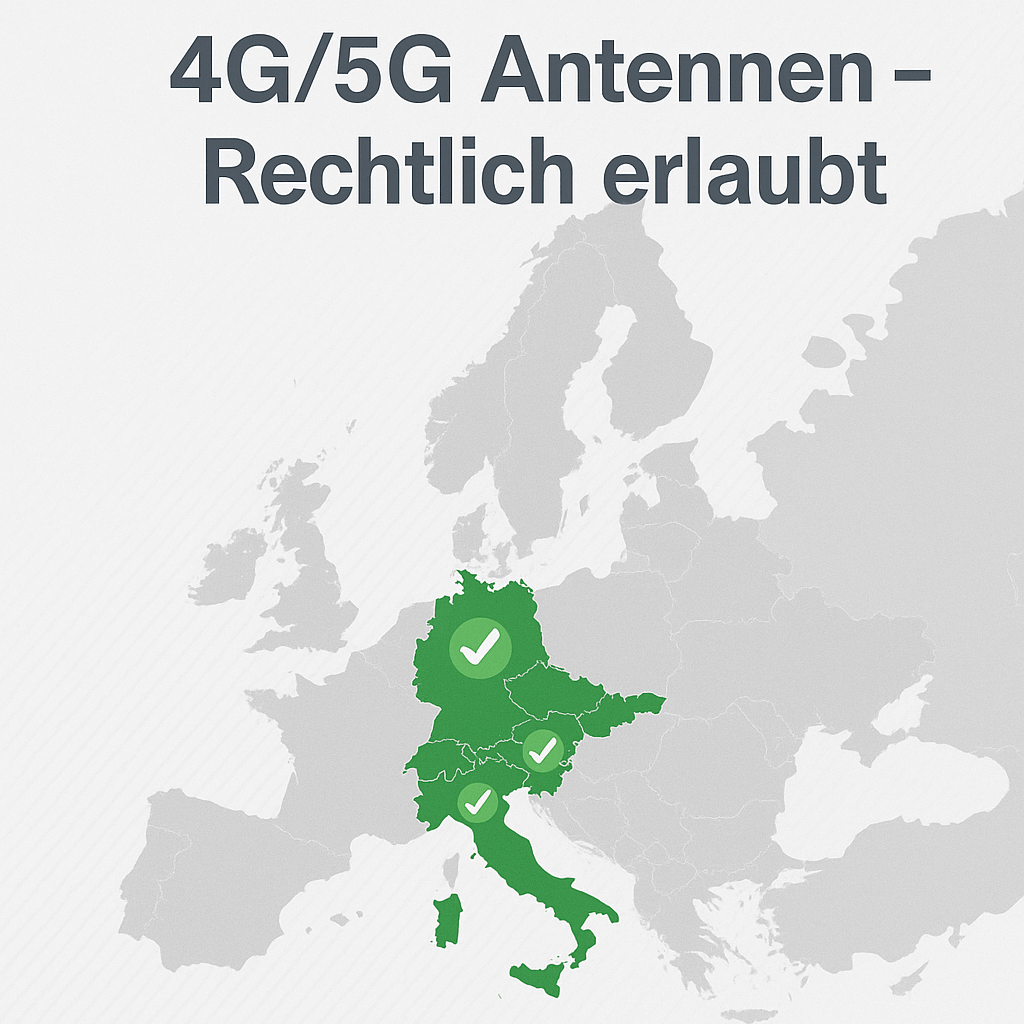
Is the use of LTE/5G directional antennas legal in Europe?
Share
Is the use of LTE/5G directional antennas legal in Europe?
An overview of the legal situation and frequency utilisation
The desire for stable and fast internet reception leads many users to optimise their mobile routers with external directional antennas. But the question often arises:
"Is that even allowed?"
In this article, we clarify the legal situation in Austria, Germany, Switzerland and Europe in general. We pay particular attention to the authorised frequency bands and their significance for antenna technology.
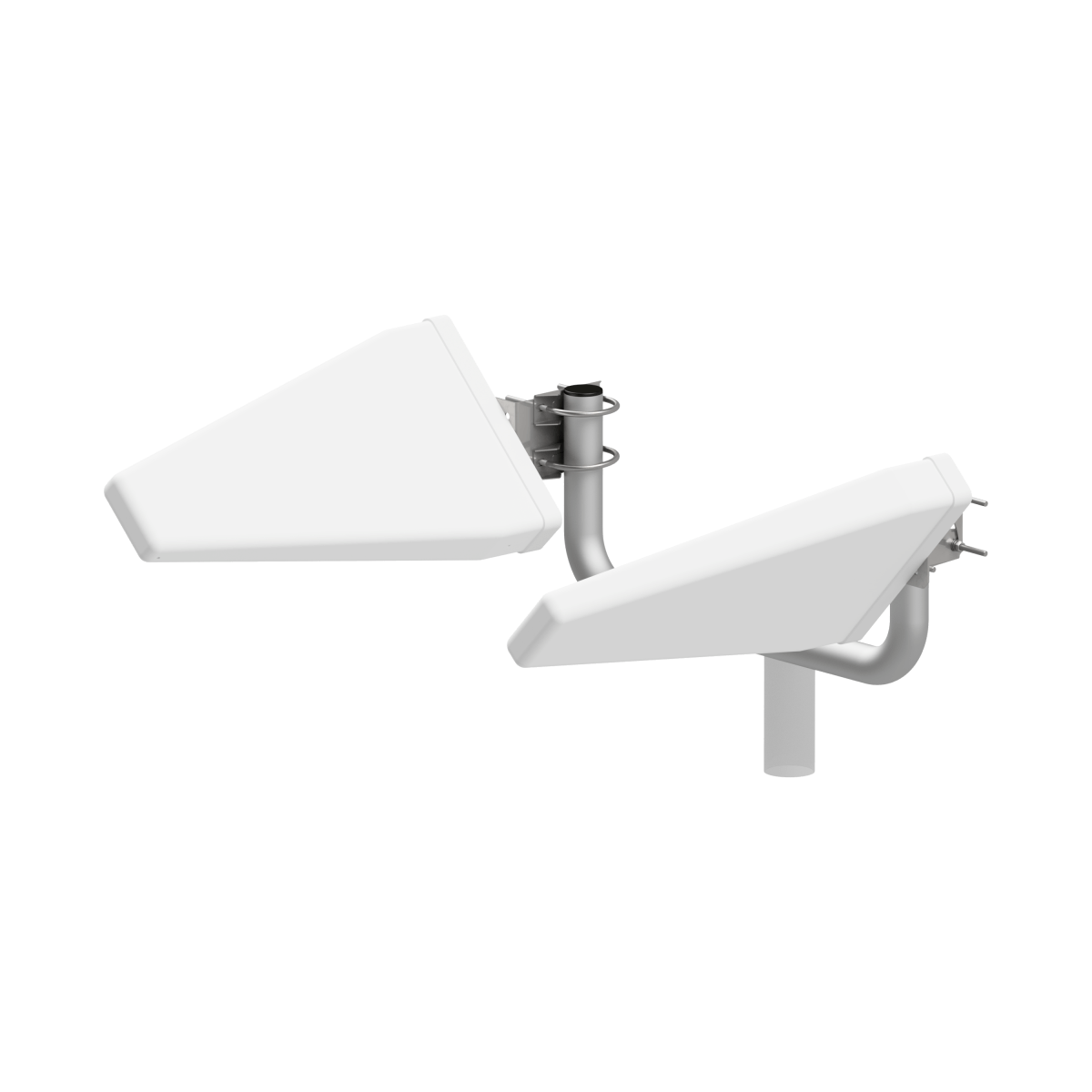
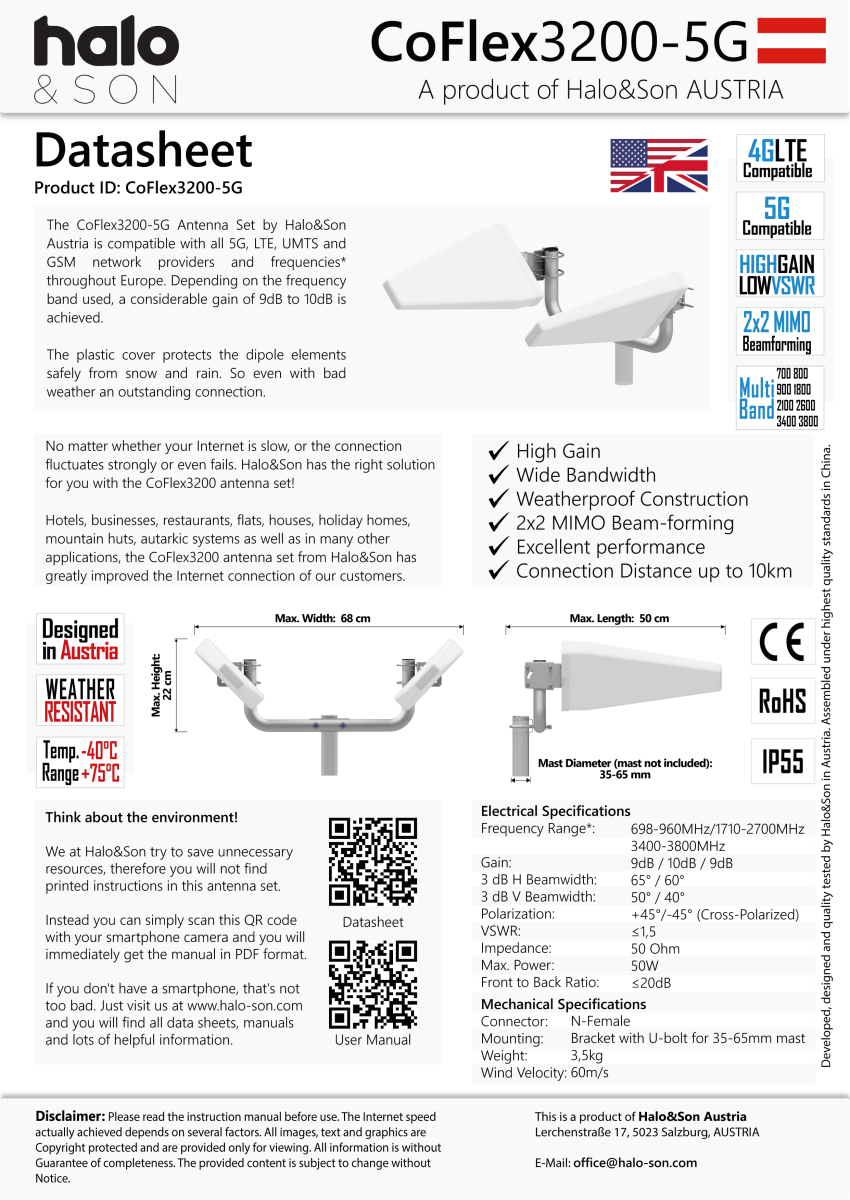
Passive antennas are permitted - under certain conditionsOur products - such as the CoFlex3200-5G outdoor antenna - are passive directional antennas. They do not actively amplify the mobile phone signal, but merely bundle it in a specific direction. Such antennas are generally not subject to authorisation throughout Europe as long as:
- they do not contain integrated amplifiers (boosters/repeaters), they are connected to a compliant end device (e.g. LTE/5G router with CE labelling),
- the operation only takes place in authorised frequency bands,
- no harmful interference to other radio services occurs.
Authorised frequency bands in Europe
Different frequency ranges are approved depending on the mobile communications standard and country. For antennas such as the CoFlex3200-5G, which is designed for 700-3800 MHz, the following bands are relevant:
| Frequency (MHz) | 3GPP band | Application | Status in Europe |
|---|---|---|---|
| 703-733 & 758-788 | Volume 28 | LTE 700 (Digital Dividend 2) | In operation |
| 791-821 & 832-862 | Volume 20 | LTE 800 | In operation |
| 880-915 & 925-960 | Band 8 | GSM / LTE 900 | In operation |
| 1710-1785 & 1805-1880 | Volume 3 | LTE 1800 | In operation |
| 1920-1980 & 2110-2170 | Volume 1 | UMTS / LTE / 5G (FDD) | In operation |
| 2500-2570 & 2620-2690 | Volume 7 | LTE / 5G | In operation |
| 3400-3800 | Band n78 | 5G (NR, TDD) | In operation |
These bands have been approved by European regulatory authorities for mobile radio services. The operation of passive receiving antennas in these bands is permitted as long as there are no active transmitting functions (e.g. using repeaters).
Legal situation in various countries
🇦🇹 Austria
Regulatory authority: RTR - Rundfunk und Telekom Regulierungs-GmbH
Passive antennas are permitted. Devices must be CE-compliant. Active repeaters require a licence.
https://www.rtr.at
🇩🇪 Germany
Responsible: Federal Network Agency (BNetzA)
Passive receiving antennas are permitted. Active mobile radio amplifiers are generally prohibited or subject to notification.
https://www.bundesnetzagentur.de
🇨🇭 Switzerland
Responsible: OFCOM
Use of passive reception antennas is legal. Devices must meet the technical requirements.
https://www.bakom.admin.ch
What can be problematic
Even with legal antenna hardware, problems can occur in individual cases - especially with defective end devices.
An example from our practice: A customer used a Ubiquiti NanoStation M2 that was damaged by water ingress. As a result, the device was transmitting on an unauthorised frequency - which called the superior radio monitoring authority into action.
ConclusionThe use of passive LTE/5G directional antennas such as the CoFlex3200-5G is permitted in Austria, Germany, Switzerland and the entire EU, provided the antenna:
- is passive (not actively amplifying)
- is connected and operated correctly,
- operates within the licensed frequency bands .
Illegal applications are usually only caused by active repeaters or defective end devices that transmit without authorisation.
Questions? We are happy to help!
📧 service@halo-son.com
🛠️ You can obtain data sheets, technical information and advice directly from our team.
📄 You can also find our data sheets online at https://shop.halo-son.com/pages/downloads
📞 For personal advice, you can also reach us by phone at +43 676 423 1634